Sacramento Closes the Healthy Food Exemption Loophole, Strengthening Tobacco Retailer Licensing Policy!
by Twlia Laster, Project Director
The City of Sacramento has taken another significant step toward protecting public health by approving changes to its Tobacco Retail Licensing (TRL) ordinance that eliminated the Healthy Food Exemption for new tobacco retailers. The action follows more than 6 years of review, research, and public discussion about whether the exemption was achieving its intended purpose.
The Healthy Food Exemption, adopted in 2020, allowed certain retailers to obtain a tobacco retailer license within 1,000 feet of another licensed retailer if they dedicated a limited amount of shelf space to tobacco products and stocked specified food items. However, a city review found that the exemption resulted in an increase in tobacco retailers without significantly improving access to healthy food in underserved neighborhoods. City staff reported that between December 2020 and October 2024, 71 new tobacco retailer permits were issued, including 27 through the Healthy Food Exemption, with most of those retailers not located in areas lacking access to fresh food. Following that review, the City Council directed staff to remove the exemption for new locations while preserving existing licenses that qualified before July 1, 2026, provided they remain continuously licensed.
The ordinance adopted on July 21, 2026, also updates the City’s Tobacco Retail Licensing program to reflect changes in California law, strengthens enforcement provisions, and builds on recent Council action to increase licensing fees to better recover the cost of administering and enforcing the program. These changes continue Sacramento’s longstanding efforts to reduce tobacco retailer density and protect youth and communities that have experienced disproportionate commercial tobacco marketing.
During the City Council discussion, councilmembers also directed staff to explore what additional policy options would be necessary if Sacramento were to eventually become a tobacco-free city by phasing out the retail sale of commercial tobacco products over time. The discussion signaled that the Council is interested in examining longer term endgame strategies while continuing to strengthen the City’s existing licensing framework.
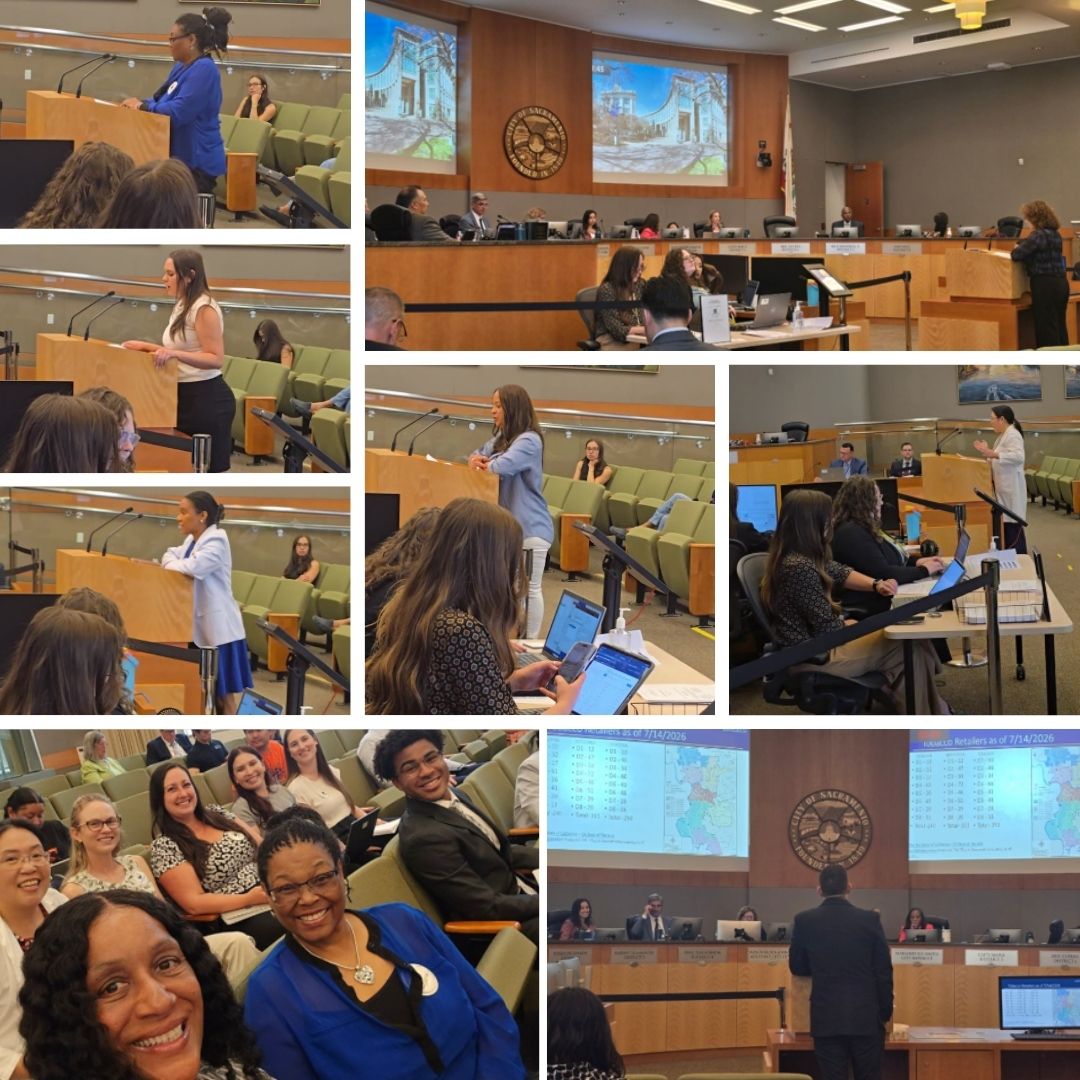
Advocates from the Greater Sacramento Smoke and Tobacco Free Coalition (GSSTFC), the American Lung Association (ALA), the American Cancer Society Cancer Action Network (ACS CAN), the American Heart Association (AHA), students, researchers, healthcare professionals, and community members delivered compelling, evidence based public comments during the City Council meeting. Speakers highlighted the public health benefits of strengthening Sacramento’s Tobacco Retail Licensing ordinance, shared research on the impacts of tobacco retailer density and targeted marketing and expressed broad support for eliminating the Healthy Food Exemption as an important step toward improving community health and advancing health equity.
As the City of Sacramento continues evaluating future policy options, one issue remains under discussion: whether tobacco retailer licenses that qualified under the former Healthy Food Exemption should remain nontransferable or be allowed to transfer to future business owners at the same location. The City’s Tobacco Retail Licensing ordinance has historically treated licenses as nontransferable, requiring a new owner to obtain a new license before selling tobacco products. The March 2026 Law and Legislation Committee specifically requested additional discussion on whether Healthy Food Exemption licenses should be transferable, recognizing the importance of carefully considering how that decision could affect the City’s long term tobacco retailer reduction goals.
In the coming weeks, national public health advocates are expected to meet with Sacramento City Council members to discuss the implications of introducing transferability for these grandfathered licenses. Advocates are expected to share information on how maintaining nontransferable licenses has historically supported tobacco retailer density reduction strategies in many California jurisdictions. They are also expected to discuss how allowing grandfathered exemptions to transfer indefinitely could be viewed as inconsistent with the Council’s expressed interest in exploring a future phase out of commercial tobacco sales. The discussions are intended to provide educational information as the City continues evaluating future policy options.
With the removal of the Healthy Food Exemption for new retailers now approved, Sacramento continues to position itself as one of California’s leaders in advancing evidence informed commercial tobacco retail policies while beginning conversations about what a long-term tobacco endgame strategy could look like for the community.